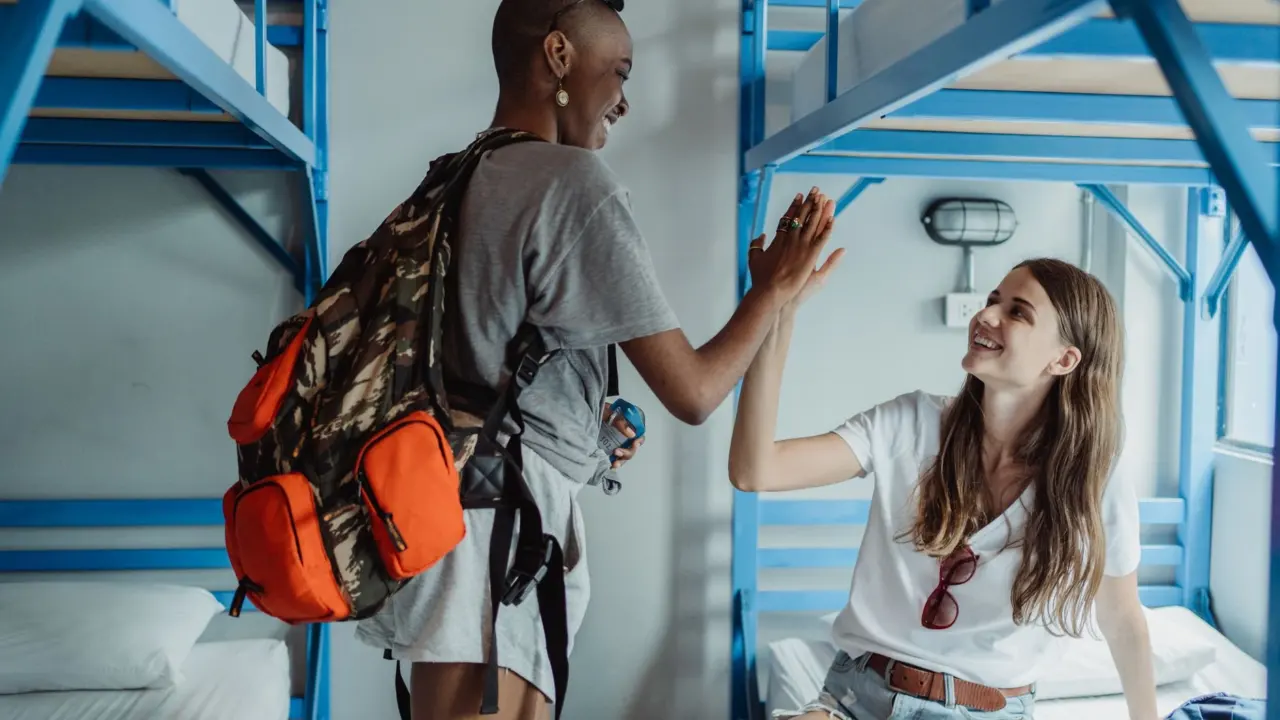
Good hostel etiquette comes down to protecting other people’s sleep: keep noise down after 10pm or 11pm, keep the lights off, use a phone torch for late arrivals, and tidy up shared spaces as you go.
Dorm manners are one part of the wider world of hostels, where strangers share rooms, bathrooms and kitchens.
Quiet hours and lights: the 11pm line
Travel writer Nomadic Matt puts the cut-off plainly: “after 10pm or 11pm, keep the noise down.” Hostel Safestay’s guide to the shared dorm agrees that the most common grievances in shared dorms almost always revolve around noise and light during quiet hours. Those two things cause most of the friction, so they come first.
Nomadic Matt also says that if it is past 11pm or before sunrise, the overhead lights stay off. The practical swap is a phone torch or the small reading light fitted to a bunk. Point the beam at the floor or into your own bag, never across the room.
Noise also travels differently depending on the room. Nomadic Matt notes that in a smaller dorm, your noise is going to be heard much more easily, and earplugs will not always cover for it. Earplugs are standard kit for sleepers, but they are a personal defence, not a licence for everyone else to be loud.

Late arrivals and early departures
A single dorm can hold a digital nomad working late, a traveller catching a 4:00 AM flight, and a group back from a pub crawl, according to Safestay. Each of them has a different clock, which is why a few habits matter more than any posted rule.
- Pack the night before. Zips, velcro and bag rustling are loud in a dark room. Do the sorting in the evening, then leave with a bag that is already closed.
- Skip the plastic bags. Safestay singles out unpacking a plastic bag at 2:00 AM as one of the loudest things in a silent room. Nomadic Matt says the same, and recommends packing plastic bags the night before too.
- Dress elsewhere. Take clothes and toiletries to the bathroom or corridor instead of rummaging beside sleeping people.
- Set one quiet alarm. Use vibration or a watch, and silence it quickly instead of hitting snooze repeatedly.
Bunk choice is part of this. If a bed is already taken, leave the rest of that bunk alone: do not drop bags on it, sit on it, or lean on the frame, because the movement wakes the person sleeping there.
Hostel etiquette in bathrooms, kitchens and common areas
Nomadic Matt lists “keep the kitchen clean” and “keep the bathrooms clean” among his core rules, and separately warns against hogging the bathroom. Those three items sit alongside the noise rules because they describe the same idea: a shared space works when each person leaves it as they found it.
In the kitchen, wash and dry what you use before you leave, and clear your food from shared shelves when you check out. Nomadic Matt jokes that nobody’s mom will clean up their mess in the hostel kitchen, which is the whole point. In the bathroom, keep showers short at peak times, and wipe down the basin and floor after you.
The common room is the place for anything loud. If a conversation is going to run past 11pm, take it there or outside, not to the bunk beside someone who has an early start. Hostels exist for meeting people, and the common area is where that happens without costing a roommate sleep.
Security belongs to the same shared-space bargain. Use the locker, keep your belongings in your own area, and do not touch other people’s things. The separate guide to hostel safety tips covers locks, valuables and what to do if something goes missing.
Phones, headphones and screens
Nomadic Matt gives phones their own rule, “use headphones”, which in practice means every call, video and game once the 10pm or 11pm window opens. The rule is not only for bedtime: a shared room in the afternoon can still hold someone recovering from a night bus or a 4:00 AM flight.
His advice for calls is direct. If you need to make a call and don’t have headphones, go to the common room. Keep the phone on silent or vibrate, turn off keyboard clicks, and dim the screen if you scroll in bed. A bright screen in a dark dorm works as a light source, so the same 11pm rule applies as for the overhead lights.
Speakerphone is the usual offender. A video call on speaker in a dorm makes everyone in the room a participant, and a roommate cannot opt out of it. Music is the same: a small speaker on a bunk may seem harmless, but sound carries across a room of bunks. Headphones, a quiet corner of the common room or the street outside all solve the problem without any argument.
Charging is another small point of friction. Sockets are limited, so claim only the one next to your bed, do not unplug another guest’s device, and do not leave a phone buzzing on a shared shelf. A cable and a short extension lead are easy to pack, and they reduce the need to hover around other people’s beds at night.
When a roommate breaks the rules
If a roommate ignores the 11pm convention, a calm, short request usually works better than a stare or a passive-aggressive note. Something like “Could you keep it down? People are asleep” is plain enough to be understood, and it is easier to say at the time than the next morning. Stay friendly and specific: name the problem, such as the light or the talking, and thank them when it stops.
Walking away is also an option. A guest who is noisy on arrival is often just tired and unaware of the room, so a quiet word tends to settle it. Nomadic Matt’s whole list is written around that assumption: most rule-breaking is thoughtlessness, not hostility, and the fix is a reminder.
If the problem repeats, such as lights on every night or loud late arrivals, take it to reception. Staff control the room, can move you to another dorm, and are the right people to enforce the hostel’s own quiet hours. Policies differ between properties, so check the rules at check-in rather than assuming.
The same thinking applies to other shared stays. People who arrange house sitting also live in someone else’s space and depend on consideration over formal rules. Dorm life is a faster version of the same skill.
Frequently asked questions
What time are quiet hours in a hostel?
What time are quiet hours in a hostel?
Nomadic Matt advises keeping noise down after 10pm or 11pm. Individual hostels set their own times, so check the rules posted at reception.
What should I do if I arrive in the dark?
What should I do if I arrive in the dark?
Safestay recommends using your phone torch or the reading light on your bunk. Nomadic Matt adds that lights should stay off after 11pm or before sunrise.
Are earplugs enough to deal with a noisy dorm?
Are earplugs enough to deal with a noisy dorm?
Not always. Nomadic Matt notes that earplugs will not always work in a smaller dorm where noise is heard easily, so reception can help if the noise is repeated.
Where can I take a phone call?
Where can I take a phone call?
Go to the common room. Nomadic Matt says to use headphones for calls and videos, and to move to the common room if you do not have any.