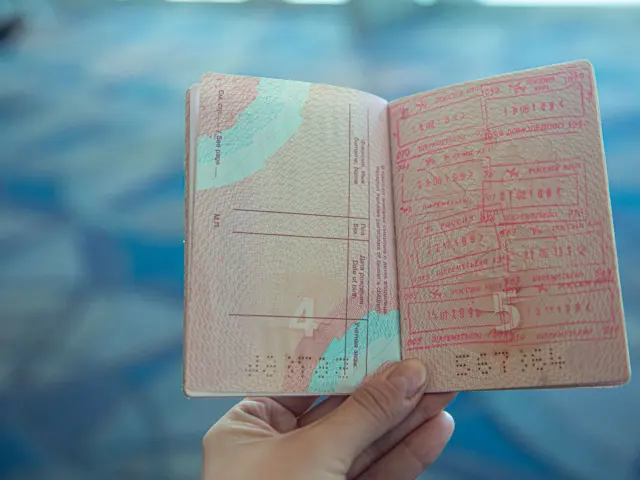
Budget travel means planning a trip around what each day costs rather than around a famous destination; with 1.52 billion international tourist arrivals recorded in 2025, cheaper regions, off-peak timing and slower itineraries stretch every dollar.
This guide covers the mechanics of spending less while still seeing a lot: how to set a daily number, where the big savings sit, which paperwork protects the plan, and how longer trips change the math.
What budget travel actually means
In 2025, UN Tourism estimated that 1.52 billion international tourists crossed borders, almost 60 million more than in 2024. That crowd is the context for budget travel: demand concentrates on a short list of cities and months, and prices follow demand. Spending less is mostly a matter of stepping away from that concentration.
Budget travel is not the same as extreme frugality. A traveler who picks a cheaper country for the same trip, instead of squeezing a daily target in an expensive city, is still doing budget travel. The discipline is choosing where money goes: a bed, food, transport between places, and the one or two experiences that justify the trip. Everything else gets a deliberate limit instead of a default.
The approach rests on four levers. Destination choice sets the baseline price of food and beds. Timing moves flights and rooms up or down. Pace decides how often money is spent on transport. Comfort level decides what a bed and a meal look like. Changing one lever by a notch usually saves more than clipping coupons on a trip that is expensive by design. The broader playbook on how to save money while traveling builds on these four levers with specific tactics.
Beginners tend to make two mistakes. The first is budgeting only for the flight and the hotel, then discovering that local transport, SIM cards, visa fees and attraction tickets add a second trip’s worth of cost. The second is treating a budget as a ceiling to approach rather than a number to stay under. Building a buffer into the plan, and tracking the real daily figure, solves both.

Where travel demand is rising and what that means for prices
UN Tourism’s World Tourism Barometer reported that Europe recorded 793 million international tourists in 2025, a 4% increase from 2024 and 6% more than in 2019. Europe is the world’s largest destination region, which is why peak-season hotel and flight prices there tend to be the least forgiving.
Other regions grew at different speeds. The Americas recorded 218 million arrivals, with 1% growth. Asia and the Pacific reached 331 million arrivals, up 6% but still 9% below 2019 levels. Africa recorded 81 million arrivals, an 8% increase, with North Africa up 11%. The Middle East grew 3%, which put it 39% above its pre-pandemic level, the strongest result relative to 2019.
Arrival counts are not price lists, but they show where the pressure sits. A region still 9% below its 2019 arrivals, such as Asia and the Pacific, has had less crowding pressure than one that has outgrown it. That does not make every country there cheap, since costs depend on local wages and currency, but it is one signal to weigh when comparing two similar trips.
Inside Europe, the pattern also varies. Western Europe grew 5% and Southern Mediterranean Europe grew 3%, while Central and Eastern Europe rebounded 6% yet remained 9% below its 2019 level. For a traveler flexible on country, the less-crowded side of the same continent can mean lower nightly rates for a similar experience.
Fast-growing destinations deserve caution as well as curiosity. UN Tourism noted that destinations reporting data through November saw growth including Bhutan (+30%), Iceland (+29%), Guyana (+24%), South Africa (+19%) and Japan (+17%). Strong growth can push prices up at the very places that looked like bargains a few years earlier, so checking recent price reports before booking is worth the effort.
| Choice | Typical saving mechanism | Tradeoff |
|---|---|---|
| Cheaper region | Lower local prices for food, beds and transport | Longer or costlier flight to reach it |
| Shoulder season | Lower room and fare rates, thinner crowds | Less predictable weather, seasonal closures |
| Fewer, longer stays | Fewer transport days, weekly rates | Less variety per trip |
| Shared accommodation | Lower price per bed, kitchen access | Less privacy and quiet |
The table is the author’s own summary of common tradeoffs, informed by the regional arrival figures in the UN Tourism release on 2025 arrivals. Prices vary by city and date, so each row is a direction to test against live quotes rather than a fixed rule. A traveler comparing two itineraries can score each row for the trip in question, then keep the version where the tradeoff column hurts least. Writing the comparison down, even in a short list, makes the decision faster and exposes assumptions that would otherwise stay hidden until the money is spent.
Setting a daily budget that holds up
A workable plan starts with a daily number built from four buckets: accommodation, food, local transport and activities. Long-haul transport is budgeted separately, because a single flight can equal a week or more of local spending and distorts the daily average if mixed in. The 2025 UN Tourism figure of 1.52 billion arrivals is a reminder that popular routes get crowded, so a plan with slack beats a tight one.
The step most beginners skip is working backward from the total. Pick the total amount available, subtract flights, insurance, visas and a buffer, and divide the remainder by the number of days. If the result is thin for the chosen destination, the fix is to shorten the trip, pick a cheaper country or slow the pace, not to hope the numbers improve on arrival.
Fixed costs belong in the plan before departure. Visa fees, vaccinations, insurance and the first night’s accommodation should be settled early so that the remaining daily figure is realistic. Variable costs, such as meals and local buses, are where the daily tracking matters. A simple spreadsheet or phone note, updated each evening, shows drift within a couple of days instead of at the end of the trip.
Spending habits matter more than prices. A traveler who eats one meal a day at a grocery store or market, walks between sights and picks free museum days will spend less in an expensive city than a casual spender will in a cheap one. Cash withdrawals, card fees and currency conversion also leak money; checking a bank’s foreign-transaction policy before leaving avoids repeated small charges. A wider list of habits sits in these travel tips, and the more technical tricks are collected under travel hacks.
A buffer protects the plan from the unexpected: a missed connection, a lost phone or a sudden illness. Holding back a portion of the total as untouchable money, spent only on genuine problems, keeps a small mishap from ending the trip early. If the buffer is untouched at the end, it becomes a bonus night or a treat on the last day.
Flights, beds and getting around
Transport and accommodation usually take the largest share of a trip budget, which makes them the places where careful choices pay off most. In Europe alone, 793 million international tourist arrivals in 2025 competed for the same trains, flights and rooms, so flexibility on date, airport and style turns directly into lower prices.
For airfare, flexibility is the main tool. Comparing nearby airports, shifting a departure by a day or two, and booking one-way legs separately can each lower a fare. The dedicated guide to cheap flights covers search methods and timing in detail. Low-cost carriers often add fees for bags and seat selection, so the comparison should be made on the full price including a checked bag, not on the headline fare.
For beds, a shared dorm room costs a fraction of a private hotel room in most cities, and a hostel kitchen cuts the food bill further. Modern properties also offer private rooms at lower rates than hotels, which suits travelers who want quiet without the full hotel price. The guide to hostels explains how to read reviews, check locker security and choose by neighborhood. Apartment rentals and house-sitting can beat both for stays beyond a few nights, since a kitchen and a weekly rate change the daily math.
On the ground, public transport, walking and overland buses and trains are cheaper than taxis and domestic flights in nearly every country. Night trains and night buses also replace a night of accommodation. The tradeoff is time, which is why pace matters: a traveler with a long trip can accept a slow overland leg that a short-trip traveler cannot afford. For travelers who combine hiking, hostels and overland routes, backpacking is the classic format and has its own planning logic.
Food offers the quickest daily savings. Eating where residents eat, buying fruit and staples at markets, and choosing a restaurant a few streets from the main square all lower the bill without lowering the quality. Drinking water from a refillable bottle, where tap water is safe, removes a small daily cost that adds up over weeks.

Insurance, visas and paperwork that protect the budget
The GOV.UK guidance on foreign travel insurance, last updated on 2 August 2024, gives three sample bills for travelers without cover: a broken leg in Spain at £25,000 or more, a quad bike accident in Greece at £80,000 or more, and an infection treated in a hospital in the USA at £150,000 or more. One medical event can cost more than a year of cheap travel, which is why insurance is a budget item and not an optional extra.
Cheap cover still has to match the trip. The same GOV.UK page advises checking whether a policy covers the full length of the trip, since policies carry a maximum trip length or an annual limit, and notes that most policies do not cover events that happen after excessive alcohol or recreational drugs. Public health cards help but do not replace a policy: the GOV.UK page states that EHIC and GHIC are not alternatives to travel insurance because they do not cover private medical costs, repatriation or mountain rescue in ski resorts. The guide to a travel insurance budget compares cover levels and what to look for in a low-cost policy.
Entry rules can also change costs. The European Commission explains that the Schengen short-stay rule is calculated as 90 days per period of 180 days, and that its Entry/Exit System registers non-EU nationals travelling for a short stay in 29 European countries. A traveler who overstays or miscounts risks fines and entry bans, which are far costlier than the stay was worth. The Commission publishes a short-stay calculator on the same page.
Before booking, check the government travel advice for the destination. The GOV.UK foreign travel advice service covers 226 countries and territories and lets readers sign up for email updates on a country’s page, so changes in entry rules or safety warnings arrive before departure. Travelers from other countries should check their own government’s equivalent service and compare entry requirements for their passport.
Work-linked visas can fund a trip instead of draining a budget. The UK’s Youth Mobility Scheme lists an application fee of £340 and a healthcare surcharge that is usually £776 per year, and it allows a 2-year stay, with a one-year extension for citizens of Australia, Canada and New Zealand. Holders may work in most jobs and may be self-employed if their equipment is not worth more than £5,000 and they have no employees. Other countries run similar schemes with different fees and age limits, so the working holiday visa guide covers how to compare them. Fees and rules change, so the official government page for the chosen scheme should be checked before applying.
Long-term, slow and location-independent travel
A trip of a year and a trip of a week need different budgets, even at the same daily spend, because the longer trip trades sightseeing for routine. The 2-year stay allowed by the UK Youth Mobility Scheme shows how institutions already treat extended travel as a distinct category. The cost per day usually falls as the trip lengthens, since fewer days are spent in transit and longer rentals bring weekly or monthly discounts. The planning habits for long-term travel focus on this shift from itinerary to lifestyle.
Pace is the biggest hidden lever. Staying in one place for a fortnight instead of changing city every couple of days removes a string of transport days, check-ins and rushed meals. That logic is the core of slow travel, which also tends to produce better local knowledge, cheaper meals and friendlier landlords.
Income changes the equation completely. A digital nomad keeps earning from remote work while moving between cheaper cities, so the trip stops being a drawdown of savings. The tradeoffs are reliable internet, tax and visa limits, and the discipline to work on a schedule. Short-stay visa limits such as the Schengen 90 days per period of 180 days matter more for nomads than for tourists, because the days add up quickly.
Other travelers replace rented rooms with a vehicle. Van life turns transport and accommodation into one cost: fuel, insurance, maintenance and parking replace nightly rates. It works best for travelers who value flexibility and can handle maintenance, though the vehicle’s purchase price and repairs can erase the savings if the trip is short.
Whatever the format, the same checks apply. Re-run the daily budget after the first fortnight using real receipts, adjust the pace or destination if the number is off, and keep the insurance policy matched to the trip’s length. Budget trips succeed or fail on those habits, not on a single clever trick.
Frequently asked questions
What is budget travel?
What is budget travel?
Budget travel is planning a trip around a daily spending target by choosing cheaper destinations, off-peak dates and slower routes. With 1.52 billion international tourist arrivals in 2025 according to UN Tourism, avoiding the busiest places and months is the main way to cut costs.
Is travel insurance worth it on a tight budget?
Is travel insurance worth it on a tight budget?
Yes. GOV.UK lists sample uninsured bills of £25,000 or more for a broken leg in Spain and £150,000 or more for an infection treated in a hospital in the USA, so one claim can exceed the savings from skipping cover. A health card such as the EHIC or GHIC does not replace a policy.
Can a working holiday visa pay for a trip?
Can a working holiday visa pay for a trip?
It can. The UK Youth Mobility Scheme, for example, allows a 2-year stay and work in most jobs, but it costs £340 in application fees plus a healthcare surcharge that is usually £776 per year, so the earnings need to be weighed against those costs before applying.
How long can a non-EU traveler stay in the Schengen area?
How long can a non-EU traveler stay in the Schengen area?
The European Commission describes the short-stay rule as 90 days per period of 180 days, and says its Entry/Exit System registers non-EU nationals on short stays in 29 European countries. Use the Commission’s short-stay calculator before booking a long itinerary.