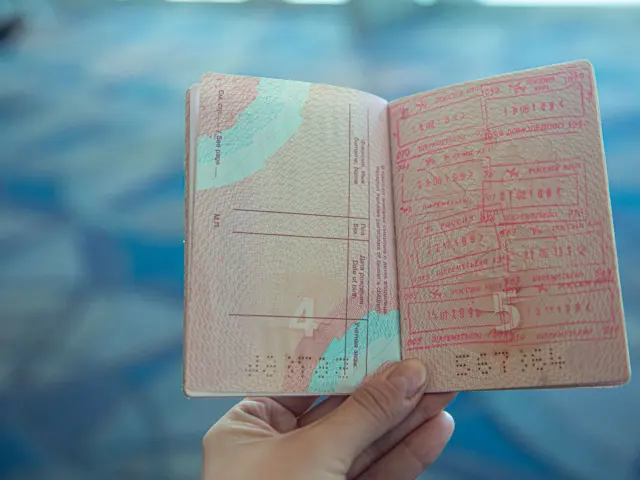
Long-term travel without burnout comes down to pacing: stay in each base long enough to build routine, plan around fixed legal limits such as the Schengen 90-day cap, and schedule rest and health admin before the trip, not during it.
The same logic runs through every guide on budget travel, and it matters more once a trip stretches past a holiday.
Why the 90/180 rule shapes a long route
The European Commission states that anyone visiting the Schengen Area is usually allowed to stay a maximum of 90 days within any 180-day period. That single line shapes long-term itineraries across Europe, and it is a common source of rushed, exhausting border-hopping. A traveler who treats the limit as a deadline, not a budget, tends to cram the first weeks and arrive at the final stretch already worn out.
The Commission’s short-stay calculator page, dated 27 October 2025, explains the counting method: you count back 180 days from each day of your stay and make sure the total does not exceed 90. The window is rolling, so there is no neat reset on a fixed date. A traveler who spends 90 days in Spain and Italy cannot simply exit for a weekend and return.
The same page notes that holders of an EU residence permit or a long-stay visa are not subject to the 90/180-day rule, because those documents allow stays longer than 90 days. For travelers who want a single base for a season, that makes a long-stay visa worth researching early rather than treating Schengen days as an afternoon puzzle.
The practical lesson is to treat the 90 days as a budget of time, not a target. Sprinting through a different city every night is the fastest route to exhaustion, and it leaves no slack if a flight is cancelled or an illness forces a pause. Leaving the final weeks of the allowance unplanned gives a cushion for exactly those surprises, and it keeps the Schengen Area from feeling like a countdown.
Build a route with rest days in it
A 90-day allowance sounds generous until it is divided into one-night stops. Fewer, longer stays cut the number of packing days, check-ins and transit days, which are the tasks that drain energy fastest. Pairing the rolling 180-day window with a short list of bases is gentler than chasing every capital, and it makes the 90-day count easy to keep in your head.
This is the core idea behind slow travel: renting a flat or room for a few weeks, learning the nearest market and laundrette, and letting the place set the rhythm. A traveler who stays put pays for fewer transport legs, which also helps the budget, and gains time to find a gym, a library or a regular café. Those small anchors are what keep a trip from feeling like an endless series of arrivals.
A workable pattern alternates a busy stretch with a quiet one. After a week of sightseeing, the next week can be deliberately empty. The European Commission’s 90-day limit then works in the traveler’s favor, because it forces choices that a limitless trip would never demand.

Slack days should be written into the plan as fixed items. If a 90-day Schengen stay is divided across several bases, each transfer day can be followed by a day with no obligations. That habit costs almost nothing and prevents the compounding fatigue that ends trips early.
- Schengen short-stay limit: 90 days within any 180-day period
- Counting method: count back 180 days; total must not exceed 90
- Residence permit or long-stay visa holders exempt: not subject to 90/180-day rule
- Calculator page date: 27 October 2025
- Calculator reports last permitted day: Possible stay until dd/mm/yy
Handle health admin before leaving
The US Centers for Disease Control and Prevention (CDC) advises scheduling an appointment with a doctor or travel medicine specialist at least a month before traveling to get recommended or required vaccines and medicines. On a long trip, that single appointment is the cheapest burnout prevention available.
The CDC’s travelers’ health FAQ also says to see a provider at least a month before you go to get any needed or extra medications, and to pack medications in your carry-on in case your luggage is lost. A traveler who relies on a prescription should ask about supply length and any paperwork while still at home, since an interrupted prescription can end a trip faster than any border rule.
Sorting this out early also removes a source of constant low-level worry. A folder with copies of prescriptions, insurance details and emergency contacts means a stomach bug in the middle of the trip is an inconvenience, not a crisis.
Because the CDC guidance is aimed at travelers leaving the United States, readers from other countries should check their own national health agency for equivalent advice and timelines.
Keep spending steady, not heroic
A long trip is funded by averages, not by single great deals. A daily budget that is tracked against the number of days left in the 90/180 allowance shows quickly when a city is draining the plan, and it avoids the stress of a balance that falls faster than expected.
Long-haul travelers can burn out financially before they burn out physically, and the stress of a shrinking balance makes every decision feel heavier. The remedy is to pick one expensive stop and balance it with cheaper bases, rather than keeping every destination at the same cost. Longer rentals and cooking at home, as slow travelers do, usually bring the daily average down.
More ideas for stretching a trip, from transport to booking habits, sit in the site’s travel tips section. A buffer of spare funds, set aside and not counted in the daily budget, covers the cancelled flight or the unplanned week of illness.
Plan long-term travel around your own limits
Every rule in this guide reduces to one idea: the 90 days in the European Commission’s rule, and the month of lead time in the CDC advice, are fixed points to plan around. Everything else, including pace, budget and rest, is adjustable. Writing the fixed points down first leaves the flexible parts room to bend.
A simple planning sheet helps. List the Schengen entry date, the last permitted day shown by the Commission’s calculator, the date of the medical appointment, and the dates of each base. Seeing those dates on one page reveals crowded stretches before they are booked, and the traveler can add a rest week where the schedule looks tight.
Spot burnout early and reset
Burnout on the road rarely arrives suddenly. The signs are small: skipping meals, scrolling in the hostel instead of leaving it, feeling irritated by sights that would have thrilled in the first week. Noticing them while there are still plenty of days left in the 180-day window gives room to change plans.
The reset is usually structural rather than emotional. Stay put for a week, cancel upcoming bookings if they are refundable, and fix one routine such as a morning walk or a weekly call home. If the traveler is near the 90-day limit, the European Commission’s calculator shows the last permitted day, so any pause can be planned with certainty.
Ending a trip early is not a failure when the plan was built around limits. A route with spare days, a medical check at least a month in advance and a steady daily budget leaves several options open, including a quiet stretch in one place.
Frequently asked questions
How long can a non-EU visitor stay in the Schengen Area?
How long can a non-EU visitor stay in the Schengen Area?
The European Commission says visitors are usually allowed a maximum of 90 days within any 180-day period, counted back from each day of the stay.
Does a long-stay visa follow the 90/180-day rule?
Does a long-stay visa follow the 90/180-day rule?
No. The European Commission’s calculator page says holders of an EU residence permit or long-stay visa are not subject to the 90/180-day rule, because those documents allow stays longer than 90 days.
When should long-term travelers see a doctor?
When should long-term travelers see a doctor?
The CDC advises seeing a provider familiar with travel medicine at least a month before an international trip, so vaccines and extra medications can be arranged.
Where should medication be packed?
Where should medication be packed?
The CDC recommends packing medications in the carry-on, in case checked luggage is lost.