How much to budget for backpacking: US$20-45 a day in Laos, Nepal, India, Vietnam or Cambodia, and US$55-110 a day in Portugal, Greece, Croatia or Italy, according to an October 2026 cost index.
Flights are the other half of the maths, so the guide to cheap flights pairs well with the daily figure set out below.
Daily budget ranges by region
The Backpacker Cost Index, updated on 26 October 2026, groups 21 countries into three broad bands. The cheapest band runs US$20-45 a day. The middle band, covering Portugal, Greece, Croatia and Italy, runs US$55-110 a day. The most expensive band, covering Japan, South Korea, Australia and New Zealand, runs US$60-120 a day.
Inside Southeast Asia the spread is narrower than the headline suggests. The same index lists Laos at US$20-30 a day and Thailand at US$30-45 a day. A traveller who splits a long trip between the two lands near the middle of the cheapest band.
A second source, the Southeast Asia cost guide on Indie Traveller, gives a regional average of about US$35 a day, or about US$1,000 a month, for a longer trip. That figure sits inside the index ranges, which is a useful sanity check: two independent writers, two similar answers.
What a daily figure covers and what it leaves out
The index defines a backpacking day as a dorm or simple guesthouse, local food, local transport and a few paid sights. Each range runs from a careful day (dorm, street food, walking) to a normal social day with a paid sight, a few drinks and some local transport. Pick the low end only if that careful day is how the trip will really run.
The same page states that flights, visas and insurance are not included. Treat the daily number as the cost of being on the ground, and budget the three exclusions separately before leaving home.
- Included: a bed, three meals, local buses or trains, entry to a few sights.
- Excluded: international flights, visas, travel insurance, gear, vaccinations.
- Easy to forget: multi-day treks, diving courses and safaris, which the index treats as one-off activities rather than daily costs.
Turning a daily figure into a trip total
A 60-day trip at the Indie Traveller regional average of US$35 a day comes to US$2,100 on the ground. The same 60 days at the top of the Portugal-to-Italy band, US$110 a day, comes to US$6,600. The gap of US$4,500 is larger than the cost of most long-haul tickets, so the choice of region matters more than the choice of hostel.
Mixed itineraries work best when each country gets its own line. Twenty days in Laos at US$20-30 a day and twenty days in Thailand at US$30-45 a day produce a combined range of US$1,000-1,500 for those forty days. Multiply country by country rather than applying one average to the whole route.
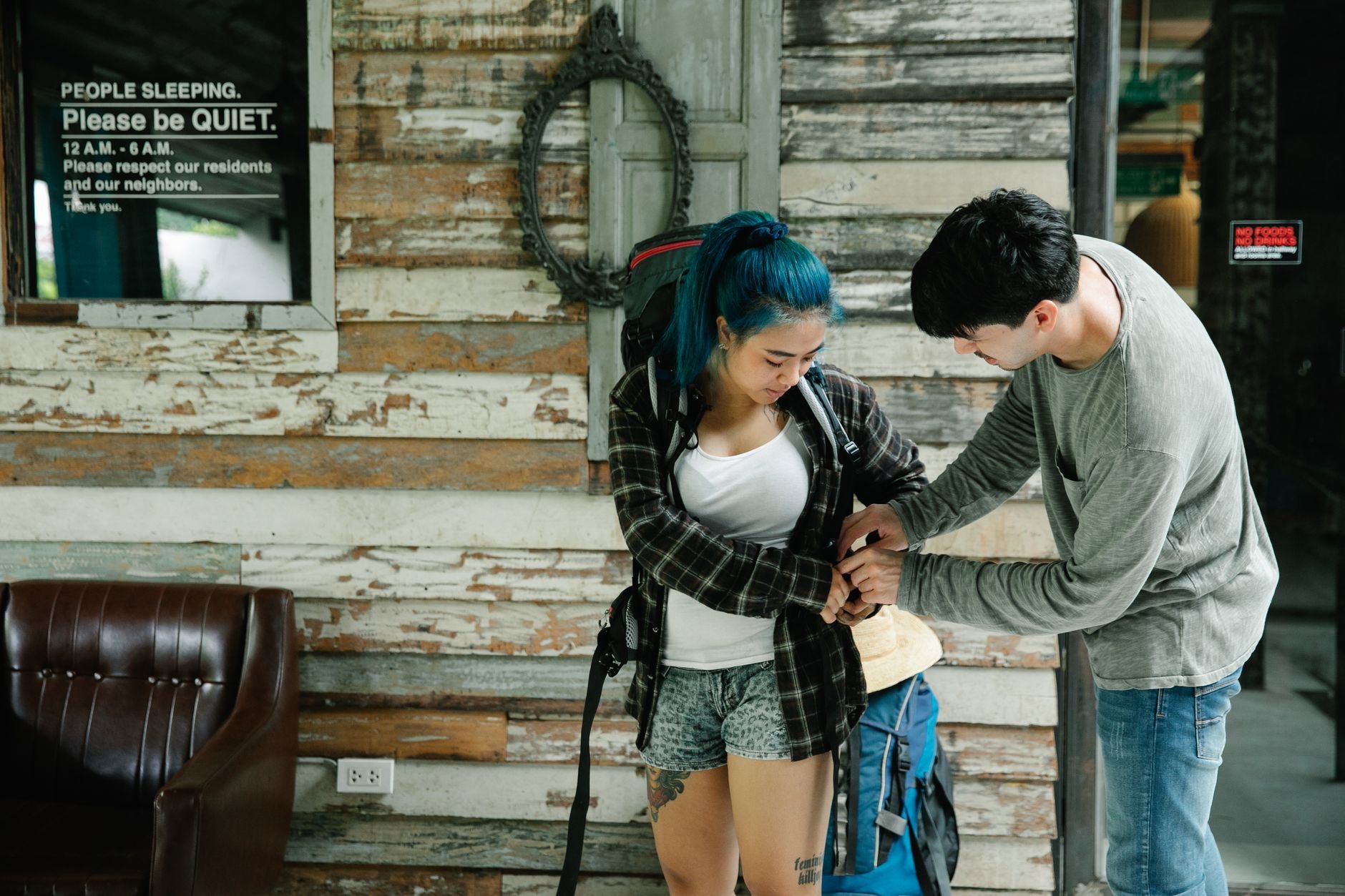
Pick the low end of each range for a trip where dorms and street food are fixed, and the high end for a trip with private rooms, tours and regular nights out.
Costs that sit outside the daily budget
Three costs sit outside every daily figure above: the flights in and out, visas, and insurance. Flights are usually the largest single line. A trip that crosses several continents may be cheaper as one multi-stop fare, which the guide to a round the world ticket compares with separate one-way tickets.
Card fees are the quiet leak. A fee charged on each overseas purchase, plus a separate fee on each cash withdrawal, adds up over a 60-day trip with daily spending. The walkthrough on how to avoid foreign transaction fees explains which cards and accounts remove them.
How to budget for backpacking by travel style
The index builds each range from two ends: a careful day and a normal social day. In Thailand that is US$30-45 a day, so the top of the range is half as much again as the bottom. Across a full month, that gap pays for a week of private rooms.
Travel style moves the number more than the country does. A traveller who cooks in hostel kitchens, walks between sights and sleeps in dorms will sit at the bottom of the range. A traveller who books a private room, eats every meal in a restaurant and joins paid tours will sit at the top, or above it. The index describes its ranges as a dorm or simple guesthouse with local food and transport, so private rooms and imported food push a day past the stated figure.
Length of stay matters as well. Indie Traveller notes that what is expensive on a short holiday becomes relatively a lot cheaper on a long backpacking trip. Longer stays allow slower travel, fewer paid transfers, weekly or monthly room rates and fewer tour bookings, all of which lower the average daily cost.
- Lean: dorm bed, street food, walking, one paid sight a week. Aim for the bottom of the range.
- Middle: guesthouse room, a mix of street food and cafes, local buses, two paid sights a week. Aim for the midpoint.
- Social: private room, restaurant meals, drinks, regular tours. Aim for the top of the range, or above it.
Start with the midpoint of the range for the chosen country, then adjust up or down once the first week of real spending is recorded. A week of receipts is a better guide than any published average, because it reflects the traveller’s own habits rather than a blogger’s.
Keeping the budget on track on the road
A daily ceiling only works if it is checked. The Backpacker Cost Index publishes its ranges in US and Australian dollars. Convert the home-currency budget once, before departure, so that every price seen in a menu or a hostel listing can be judged against the ceiling at a glance.
A simple routine keeps the figure honest. Record each purchase in a notes app or a spreadsheet, total it each evening, and compare it with the daily limit. If a day runs over, shave the next one rather than letting the overspend roll forward. A weekly total is easier to hold than a daily one, because a single expensive tour can be absorbed by three cheap days.
The index notes that Japan, Italy, Croatia and New Zealand need the most careful budget, because a normal social day there can overshoot the range quickly. Tracking each day against the ceiling is the simplest control. Write down the daily limit before arriving and check it each evening.
Two habits protect the total. First, let cheap countries subsidise expensive ones: a month in Vietnam, where the index sets a low daily range, leaves room for a short, pricier stop in Italy. Second, hold a cushion on top of the planned figure for a missed connection, a medical bill or a flight change. A trip planned to the exact dollar has no room for any of those.
Frequently asked questions
What is a realistic daily budget for Southeast Asia?
What is a realistic daily budget for Southeast Asia?
Indie Traveller puts the regional average at about US$35 a day for a longer trip. The Backpacker Cost Index gives US$20-30 a day for Laos and US$30-45 a day for Thailand.
Does the daily budget include flights?
Does the daily budget include flights?
No. The Backpacker Cost Index states that flights, visas and insurance are not included in its daily ranges, so each needs its own line in the trip total.
How much does a 60-day trip cost in Southeast Asia?
How much does a 60-day trip cost in Southeast Asia?
At the Indie Traveller average of US$35 a day, 60 days comes to US$2,100 on the ground, before flights, visas and insurance.
Which regions are the cheapest and most expensive?
Which regions are the cheapest and most expensive?
The Backpacker Cost Index lists Laos, Nepal, India, Vietnam and Cambodia at US$20-45 a day. Japan, South Korea, Australia and New Zealand sit at US$60-120 a day.