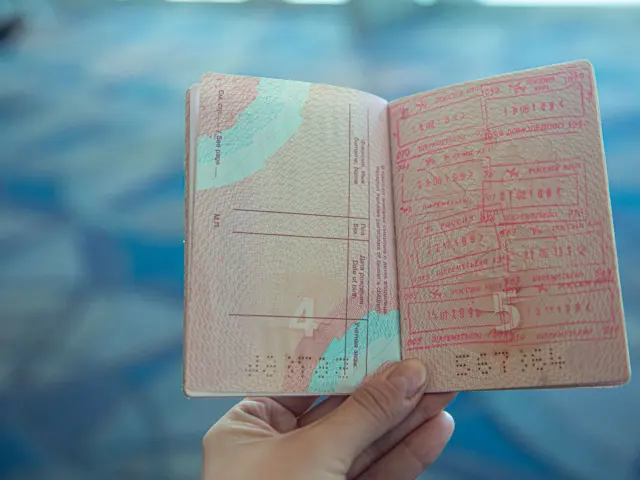
A round the world ticket bundles up to 15 stopovers on 26 Star Alliance airlines into one fare valid for 12 months. It pays off mainly on long, multi-continent routes, not on cheap hops.
Travellers comparing every option for cheap flights will find that these tickets sit at the other end of the spectrum: they sell convenience and flexibility first, and savings only when the route fits the rules.
How a round the world ticket works
A round the world ticket is a single booking that carries a traveller around the globe in one direction, east or west, and returns to the starting country. The two big airline alliances sell the best-known versions. Star Alliance advertises travel with 26 member airlines, up to 15 stopovers, and a journey completed within 12 months. Its network reaches over 1,150 airports in over 190 countries, all on a single ticket.
The oneworld alliance sells three types of trip: oneworld Explorer, a continent-based fare; Global Explorer, a distance-based fare; and Circle Pacific, an inter-continental journey around the continents that border the Pacific Ocean. On oneworld.com, travellers can book Explorer or Global Explorer directly, while Circle Pacific goes through a travel agent.
The price is not a flat number. According to oneworld, the fare is based on the number of continents visited or the distance travelled, the travel class selected, and the number of travelling passengers. A solo economy traveller crossing three continents and a pair in business class crossing six will see very different totals.
The rules that shape the route
Every round the world ticket trades freedom for structure. The oneworld Explorer groups the world into three zones and six continents: Zone 1 covers North and South America, Zone 2 covers Europe, the Middle East and Africa, and Zone 3 covers Asia and the South West Pacific. The trip must move in a continuous forward direction, east or west, between those zones. Backtracking within a continent is generally permitted, though exclusions apply.
Star Alliance sets its own conditions. Travellers start and end in the same country and travel in one direction, and the trip can last up to 12 months after the first flight departs. Minimum stays also apply. For Economy and Premium Economy fares, travel on the last international sector must depart at least 7 days after the start of the first international sector. First and Business Class fares require at least 10 days between the first and last intercontinental sector.

These limits matter in practice. A traveller who wants to loop back from Bangkok to Tokyo and then return to Bangkok may break the one-direction rule. Someone who wants a slow, open-ended trip cannot use a ticket that expires at 12 months. Checking the full fare rules, which both alliances publish as downloadable documents, comes before any payment.
- Star Alliance reach: 1,150 airports in 190 countries
- Trip lasts up to 12 months after first flight: 12 months
- Economy minimum stay 7 days: 7 days
- First and Business minimum 10 days: 10 days
- oneworld offers three trip types: three types
When a round the world ticket saves money
The strongest case is a trip that crosses all three zones with long-haul flights that would each cost a lot as separate one-way tickets. One 26-airline network, 15 stopovers and one change policy can replace a dozen separate bookings, each with its own baggage rules and cancellation terms. Mileage also accrues on every leg: oneworld notes that for every stop added, travellers earn more miles and points to spend across the alliance.
Premium cabins tilt the maths further. Alliance fares are priced by cabin class, and published round the world fares in business class often undercut the sum of separate long-haul business tickets. Economy is the opposite case. Low-cost carriers and one-way fares on the busiest routes can beat an alliance economy fare, particularly on short sectors inside Europe or Southeast Asia.
The best test is to price the route twice. First, build the itinerary on the alliance planner. Then price each leg separately on a flight search engine, with the same dates and cabin. If the alliance fare lands within a modest margin of the separate total, the flexibility and single ticket usually justify it.
When separate tickets win
Budget travellers often come out ahead by stitching their own route. Regional flights in Europe and Asia are priced aggressively by carriers outside the alliances, and a guide to budget airlines in europe shows how far a short hop can cost less than a checked bag on an alliance fare. The same is true for overland sections: trains, buses and ferries cost far less than a flight and do not consume a stopover.
Alliance coverage also has gaps. oneworld Global Explorer widens the airline list to include Aer Lingus, Bangkok Airways, Jetstar, Jetstar Japan and WestJet, which hints at how much the basic Explorer network leaves out. Regions with thin alliance service, such as parts of Africa and Central Asia, may push a traveller to book outside the ticket anyway.
Money planning should start with the whole trip, not the flights alone. A realistic daily spend on food, beds and local transport can outweigh the airfare, and the guide on how much to budget for backpacking helps set that number before comparing ticket types.
Planning tips before booking
A few habits reduce the risk of an expensive mistake. Start with the six continental regions and decide which of them truly matter, because with oneworld Explorer the fare depends on how many continents are visited. Drop the low-priority regions first, since each extra continent raises the price.
Next, count stopovers against the 15-stop ceiling on Star Alliance. Connections that would be a simple layover may count as a stop, so a route with several tight transfers can use up the allowance sooner than expected. Keep a few unused stops as a buffer for changes.
Finally, read the change rules. Date changes are usually cheaper than route changes, and route changes can trigger a fare recalculation. A traveller with a fixed return date and flexible stops is better placed than one who has locked every date but wants freedom later. Travel agents who specialise in these fares can catch rule conflicts that the online planners miss, and oneworld says Circle Pacific can only be booked that way.
Frequently asked questions
Is a round the world ticket cheaper than booking separate flights?
Is a round the world ticket cheaper than booking separate flights?
Not always. Star Alliance bundles up to 15 stopovers on a single ticket, which helps on long-haul, multi-continent routes, but separate low-cost one-way fares can beat it on short regional sectors. Price both options with identical dates and cabin.
How long can a round the world trip last?
How long can a round the world trip last?
Star Alliance allows up to 12 months after the departure of the first flight. Minimum stays also apply, such as 10 days between the first and last intercontinental sector for First and Business Class fares.
Can a traveller fly in any direction?
Can a traveller fly in any direction?
No. Star Alliance requires travel in one direction, east or west, and oneworld Explorer requires a continuous forward direction between its three zones, although backtracking within a continent is generally permitted.
What decides the fare on oneworld?
What decides the fare on oneworld?
oneworld bases the fare on the number of continents visited or the distance travelled, the cabin class and the number of passengers. Explorer is continent-based and Global Explorer is distance-based.