Backpacking Morocco fits a 90-day visa-free loop for UK passport holders: Tangier or Casablanca, Fes, Marrakech, then a desert side trip, linked mostly by ONCF trains, with buses and shared taxis covering the gaps.
Anyone new to the format can start with the wider backpacking overview, then use this page to plan the Moroccan route.
Entry rules for a 90-day trip
The UK government’s travel advice states that British travellers “can visit Morocco without a visa for up to 90 days for tourism.” The same page says a stay beyond 90 days requires an extension request at a Moroccan police station. Other nationalities follow different rules, so each passport holder should check their own government’s page.
Passport validity is the usual trip-ender. GOV.UK says the passport must have an expiry date at least 3 months after arrival, and that Moroccan authorities have denied entry to travellers with damaged passports. A cracked cover or a water-stained data page is worth fixing before departure rather than at the border.
Timing matters too. Morocco received a record 19.8 million tourists in 2025, a 14 percent rise on 2024, according to the Ministry of Tourism statement reported by Xinhua. Busy years push up demand for riads and desert camps, so booking the first and last nights ahead is sensible, while the middle of the route can stay flexible.
Border practicalities are simple. Carry proof of onward travel such as a ferry or flight booking, keep a printed copy of the first night’s accommodation, and photograph every passport page before leaving home. If a trip is likely to run past 90 days, the GOV.UK route of asking a Moroccan police station for an extension should be started well before the final week.
Moving between cities by rail
Morocco’s rail network gives backpackers one of the easiest overland backbones in Africa. Seat61 describes Al Boraq high-speed trains, running at 300km/h and based on France’s TGV, linking Tangier, Rabat and Casablanca every hour. Classic trains then continue from Casablanca to Marrakech, and classic lines also run Tangier-Meknes-Fes.
A common northern sequence is Tangier, Fes, Rabat or Casablanca, then Marrakech. Seat61 lays out a daytime option from Tangier to Marrakech: an Al Boraq train to Casa Voyageurs, then a classic Al Atlas train onward. For a night saved on accommodation, the Tangier-Marrakech overnight train has an air-conditioned first-class couchette car with shared 4-berth compartments, and its sleeper berths can be reserved up to 2 months in advance.
The network stops short of the coast south of Marrakech. Seat61 notes a bus connection links Marrakech with Agadir and Essaouira, so surf towns and the Atlantic coast need a bus leg rather than a train ticket.
Cities and the desert route
The route below follows the 300km/h Al Boraq line and the classic lines described by Seat61, which cover Tangier, Meknes, Fes, Rabat, Casablanca and Marrakech, and then leaves the tracks for the desert.
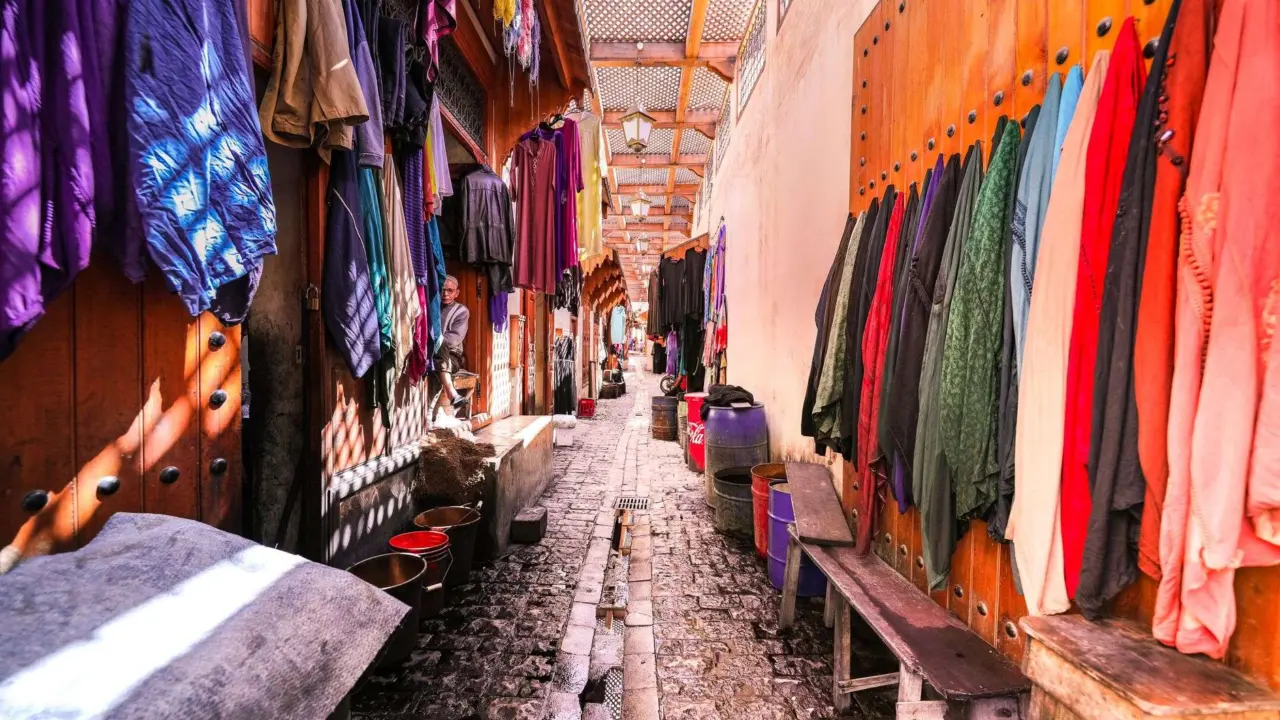
Two cities anchor each itinerary, and the desert is the third stop. Fes, reached on the Tangier-Meknes-Fes classic line, holds the old medina, a maze of lanes best explored on foot with a slow first day to learn the layout. Marrakech sits at the southern end of the Fes-Meknes-Rabat-Casablanca-Marrakech classic line and works as the base for the Atlas mountains and the south.
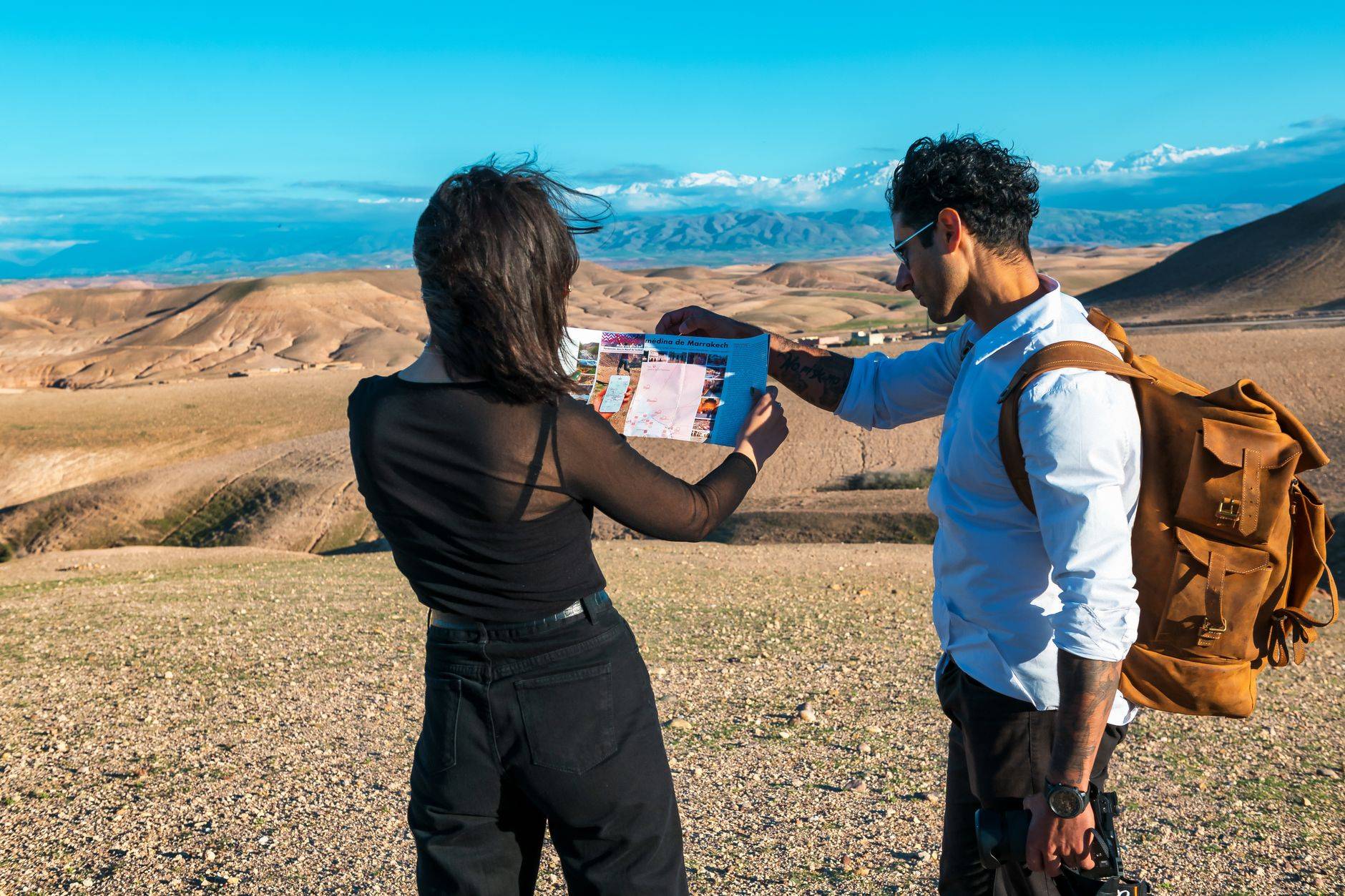
Merzouga, the usual Sahara dune destination, has no railway. The journey from Marrakech or Fes is a long day by bus or a tour transfer, so the practical choice is a multi-night desert trip from either city rather than a quick dash. Confirm bus schedules locally, since timings on route-planning sites are only estimates.
Meknes sits between Tangier and Fes on the classic line, which makes it an easy stop for travellers who prefer a quieter medina before the larger cities. Rabat and Casablanca are served by the Al Boraq trains, so a day in either costs little transit time, and Casablanca works mainly as a rail interchange for the run south to Marrakech.
Order matters. Travelling north to south, Tangier first, lets the trip build from the ferry-linked coast through the imperial cities toward the Atlas and the dunes, and it finishes in Marrakech, where onward flights are easiest to find. Doing the reverse works equally well, but the sleeper train between Tangier and Marrakech then becomes the closing leg rather than the opener.
Planning the desert detour
Desert tours are sold by guesthouses and agencies in Marrakech and Fes. Ask what the price covers (transport, camel ride, camp bed, meals), get the itinerary in writing, and compare at least two offers. Because no authoritative rate exists, treat any quoted price as a starting point for negotiation rather than a fixed tariff.
Anyone comparing regions can weigh this loop against southeast asia backpacking, where overland hops are cheaper but longer, or against the route described in backpacking central america, which relies on chicken buses rather than rail.
What backpacking Morocco costs
Budget planning starts with an honest limit: the 124 billion dirham ministry total and Seat61’s rail guide, the two sources reviewed for this page, publish no per-day backpacker price, so none is quoted here.
Morocco’s tourism industry earned 124 billion dirhams (13.6 billion US dollars) by the end of November 2025, up 19 percent year on year, the ministry reported. Those national totals show the sector’s scale, but they do not give a backpacker’s daily budget, and no single authoritative per-day figure exists.
Costs are better built from the line items that official and rail sources do document. Trains are the main fixed expense, and the Tangier-Marrakech sleeper doubles as a bed. Seat61 points to local agencies for booking couchettes from abroad, which adds a fee, so buying at the station is the cheaper path when the schedule allows.
The government’s target of 26 million tourists by 2030 suggests continued demand, which tends to lift prices in the most visited medinas. Staying outside the most photographed streets, eating where locals queue, and tracking spending against a daily limit in dirhams keeps a budget honest.
A workable approach is to separate costs into four groups: transport (rail, bus and shared taxis), beds (hostels and riads), food, and the desert tour as a single larger item. Tracking each group in dirhams for the first week gives a personal daily average that is more reliable than a number copied from a forum. Carrying cash for small purchases and tipping is practical, since smaller shops and taxis often do not take cards.
Seasonal swings also affect the average. Summer heat in Marrakech and the desert narrows the comfortable window to spring and autumn, and those shoulder seasons are when the record visitor numbers press hardest on bed prices.
Frequently asked questions
Do UK citizens need a visa for backpacking Morocco?
Do UK citizens need a visa for backpacking Morocco?
No, for tourism. GOV.UK says UK travellers can stay up to 90 days without a visa, and longer stays need an extension request at a police station.
Can trains reach the Sahara at Merzouga?
Can trains reach the Sahara at Merzouga?
No. Merzouga has no rail connection, so travellers reach it by bus, tour transfer or taxi from Marrakech or Fes.
Is Morocco busy with tourists?
Is Morocco busy with tourists?
Yes. The Ministry of Tourism counted a record 19.8 million arrivals in 2025, up 14 percent from 2024.
How early should the overnight train be booked?
How early should the overnight train be booked?
Seat61 says Tangier-Marrakech sleeper berths can be reserved up to 2 months in advance, so booking early secures the first-class couchette.